
Flat Roof
RCC Bifacial Optima
Engineered for Maximum Bifacial Panel Efficiency.
The RCC Bifacial Optima is engineered specifically for bifacial solar panels, ensuring uniform light exposure across both surfaces. Traditional systems often obstruct rear panel light, creating hotspots and reducing energy output. Our optimized design enhances light reflection and minimizes shading, boosting energy generation and preventing premature degradation. This system maximizes the power potential of bifacial panels while ensuring longevity and consistent performance, making it the ideal choice for high-efficiency solar projects.


| SR.NO. | TABLE | UPTO 4' | 4'-6' | 6'-8' | 8'-10' | 10'-12' |
|---|---|---|---|---|---|---|
| 1 | COLUMN 1 | CS 80X50X15X2 | CS 110X50X15X2 | CS 110X50X15X2 | CS 110X50X15X2.5 | CS 140X50X15X2.5 |
| 2 | COLUMN 2 | CS 80X50X15X2 | CS 110X50X15X2 | CS 110X50X15X2 | CS 110X50X15X2.5 | CS 140X50X15X2.5 |
| 2 | RAFTER | CS 110X50X15X2 | CS 110X50X15X2 | CS 110X50X15X2 | CS 110X50X15X2 | CS 110X50X15X2 |
| 3 | PURLIN | HU 60X20X35X2.5 | HU 60X20X35X2.5 | HU 60X20X35X2.5 | HU 60X20X35X2.5 | HU 60X20X35X2.5 |
| 4 | BRACING 1 | CS 80X50X15X2 | CS 80X50X15X2 | CS 80X50X15X2 | CS 80X50X15X2 | CS 80X50X15X2 |
| 5 | BACK BRACING | CS 80X50X15X2 | CS 80X50X15X2 | CS 80X50X15X2 | CS 80X50X15X2 | |
| 5 | BRACING PLATE | F 200X100X5 | F 200X100X5 | F 200X100X5 | F 200X100X5 | F 200X100X5 |
| 6 | COLUMN BASE | F/CU 200X200X5 | F/CU 200X200X5 | F/CU 200X200X5 | F/CU 200X200X5 | F/CU 200X200X5 |

Walkway System
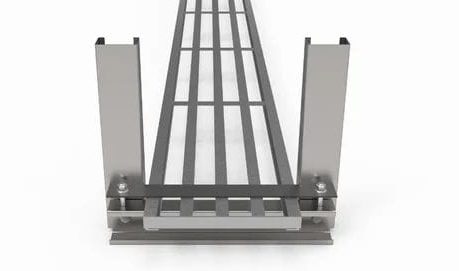
Walkway System

RCC Basic System

1P

2P
Flat Roof Solar Mounting System
What is a Flat Roof Solar Mounting System?
A Flat Roof Solar Mounting System is a specialized solar racking solution designed to install solar panels on rooftops with little to no pitch, maximizing solar energy capture while providing strong structural support.
Can solar panels be installed on a flat roof?
Yes — solar panels can be effectively installed on flat roofs, and flat rooftop systems often allow for better panel orientation and flexible layout to maximize sun exposure.
How do flat roof solar mounting systems work?
These systems use engineered frames or ballasts to support solar panels at an optimal tilt angle. Some designs require ballast weights instead of roof penetrations to secure the structure.
What are the benefits of choosing a flat roof mounting system?
Flat roof mounting systems offer maximized rooftop space utilization, easy installation, flexible panel positioning for optimal energy output, easier maintenance access, and minimal visual impact on building aesthetics.
What types of flat roof mounting systems are available?
Common options include ballasted systems — which use weights and avoid roof drilling — and elevated tilt rack systems that adjust the panel angle for peak performance.
Are flat roof solar systems as efficient as pitched roof systems?
Yes — when designed correctly with the right tilt angle and spacing, solar systems on flat roofs can achieve comparable or even enhanced energy output due to optimal sun alignment.
What should I consider before installing a flat roof solar system?
Important factors include roof load capacity, drainage, wind loads, panel tilt and spacing, and structural integrity to ensure long-term performance and safety.
Do flat roof mounting systems require roof penetrations?
Many flat roof systems can be installed without penetrating the roof membrane using ballast mounts, which helps preserve roof watertightness and reduces leak risks.
Can the flat roof mounting system be optimized for bifacial solar panels?
Yes — products like the RCC Bifacial Optima system are engineered to maximize light exposure on both front and rear sides of bifacial modules, enhancing overall energy yield.
Is maintenance easier on flat roof solar installations?
Flat roofs provide safe and convenient access for inspection, cleaning, and repair — making maintenance simpler compared to pitched roof systems.