
The Importance of Base Plates in Solar Panel Mounting Systems
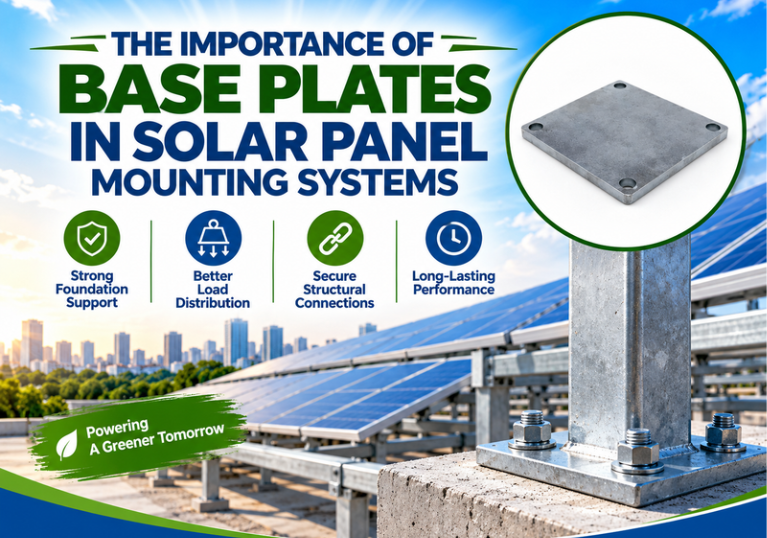
Solar energy systems depend on reliable mounting structures to support solar panels and maintain their proper positioning. These structures consist of several essential components, including support columns, mounting rails, brackets, fasteners and base plates. Each component contributes to the overall stability and functionality of the installation.
Base plates for solar panel mounting systems provide a connection interface between structural members and their supporting foundations or mounting surfaces. When correctly designed and installed, they help transfer loads, distribute forces and establish a stable connection within the mounting structure.
Understanding the importance of base plates helps Solar EPC companies, installers and project developers select suitable components for their solar installations.
What Is a Base Plate in a Solar Mounting System?
A base plate is a flat structural component used to connect a column, post or support member to a foundation or another supporting surface. It may include pre-drilled holes for bolts or anchor fasteners, depending on the design.
In Solar mounting structures, base plates are commonly incorporated at designated support points to connect structural members to their foundations. Their shape, thickness, material and hole arrangement depend on the system design and expected loading conditions.
A properly designed solar mounting structure base plate helps create a suitable connection between the supporting framework and the foundation.
Why Are Base Plates Important in Solar Panel Mounting Systems?
1. Improved Structural Stability
Base plates provide a connection point for structural columns and support members. When designed and installed according to engineering specifications, they help maintain the intended configuration of the mounting structure.
2.Effective Load Transfer
Solar mounting structures experience loads from the panels, supporting framework, wind and other environmental conditions. Base plates help transfer these forces to the supporting foundation through the designed connection.
3. Secure Fastening
Base plates may include bolt holes or other connection features that allow structural members to be secured using compatible fasteners. Correct alignment and fastening are essential for achieving the required connection performance.
4. Support for Different Solar Installations
Depending on the structural design, base plates can be used in ground-mounted solar projects, rooftop support assemblies, solar carports and other solar infrastructure applications.
5. Reliable Structural Assembly
Using base plates with suitable dimensions and specifications helps ensure that structural components fit together according to the approved engineering drawings.
Common Applications of Base Plates in Solar Projects
Base plates are used wherever a structural member requires a connection to a supporting foundation or mounting surface.
Common applications include:
- Ground-mounted solar panel structures
- Solar mounting support columns
- Commercial and industrial solar installations
- Solar carport structures
- Structural steel support frameworks
- Equipment mounting structures
- Special-purpose solar support assemblies
Different Types of Base Plates for Solar Structures
Flat Base Plates
Flat base plates provide a basic connection surface for structural members. Their dimensions and thickness are selected according to the intended application and structural requirements.
Bolt-Hole Base Plates
These base plates feature holes for bolts or anchor fasteners. The hole diameter, spacing and pattern must match the approved connection design.
Custom-Fabricated Base Plates
Custom base plates are manufactured according to project-specific dimensions, thicknesses, hole arrangements and drawings. They are useful when standard configurations do not meet the project’s requirements.
Factors to Consider When Selecting Solar Mounting Base Plates
Material and Corrosion Resistance
Solar mounting structures are frequently exposed to outdoor conditions. Select materials and protective coatings appropriate for the installation environment, including moisture and potential corrosion exposure.
Dimensions and Thickness
The base plate’s dimensions and thickness must meet the project’s structural requirements. These specifications influence the plate’s ability to accommodate the intended connection and transfer loads.
Bolt-Hole Configuration
The diameter, spacing and position of bolt holes must match the connection details. Accurate hole placement helps facilitate proper alignment and installation.
Load Requirements
Base plates should be designed for the anticipated forces acting on the mounting structure, including applicable dead loads, wind loads and other project-specific loads.
Foundation Compatibility
The base plate must be compatible with the supporting foundation, anchor bolts and connected structural members. Foundation capacity and connection details should be verified as part of the structural design.
Manufacturing Quality
Accurate fabrication, consistent dimensions, appropriate material selection, and suitable surface protection contribute to component quality. Specifications should be checked against the project’s requirements.
Find Solar Mounting Accessories for Your Project
Base plates play an important role in connecting support members to foundations and other supporting surfaces in solar panel mounting systems. Their material, dimensions, connection details and installation must be appropriate for the project’s structural requirements.
For rooftop, ground-mounted and commercial solar projects, choosing compatible components helps create a mounting structure that meets the intended design specifications.
SOLNXT Energy offers a range of solar mounting accessories for solar installation applications.
Explore the SOLNXT Energy Solar Mounting Accessories page to learn more about the available components for your project.
Planning a solar project? Contact SOLNXT Energy to discuss your solar mounting structure and accessory requirements.
Why Quality Solar Mounting Accessories Matter
The performance of a solar mounting system depends on the complete assembly, including its smaller connection components. Base plates, brackets, fasteners and other accessories must work together according to the mounting system’s design.
Choosing suitable components can help support:
- Accurate assembly and alignment
- Appropriate load transfer
- Reliable fastening connections
- Consistent manufacturing quality
- Performance under the intended operating conditions
Frequently Asked Questions (FAQs)
1. What is the purpose of a base plate in a solar mounting system?
A base plate connects a structural support member to a foundation or mounting surface. It helps transfer loads through the designed structural connection.
2. Where are base plates used in solar panel mounting systems?
They may be used in ground-mounted solar structures, rooftop support assemblies, solar carports and other applications that require a connection between structural members and their supports.
3. How do I choose the right base plate for a solar project?
Consider the material, dimensions, thickness, bolt-hole arrangement, expected loads, foundation type, corrosion exposure and approved structural drawings.
4. Which material is suitable for solar mounting base plates?
The appropriate material depends on the structural design and environmental conditions. Material strength and corrosion protection should meet the project's specifications.
5. Can base plates be customized for solar mounting structures?
Yes. Base plates can be fabricated to specific dimensions, thicknesses and hole patterns according to approved engineering drawings and manufacturing requirements.