
How Solar Mounting Structures Impact Power Generation Efficiency
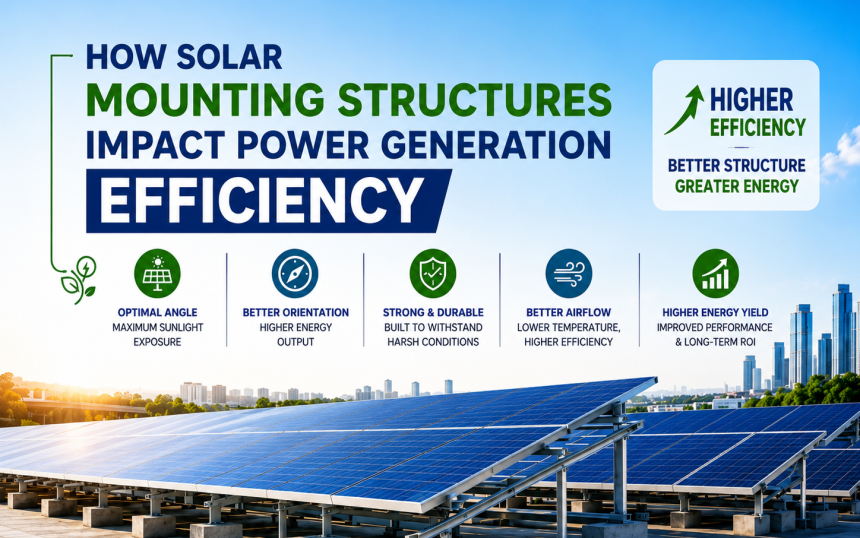
Solar energy systems are designed to generate maximum power from available sunlight. While solar panels often receive the most attention, the Solar mounting structure design plays an equally important role in determining the overall efficiency, reliability and lifespan of a solar power plant.
A well-engineered solar mounting structure ensures that solar panels are installed at the optimal angle and orientation, withstand environmental conditions and maintain long-term performance. Poor structural design can lead to energy losses, increased maintenance costs and reduced return on investment (ROI).
In this article, we explore how solar mounting structures impact power generation efficiency and why selecting the right structure is critical for any solar project.
What Is a Solar Mounting Structure?
A solar mounting structure is the framework that supports and secures solar panels in place. It provides the necessary strength and stability while ensuring that modules receive maximum sunlight throughout the day.
- Rooftop solar installations
- Ground-mounted solar projects
- Solar carports
- Industrial and commercial solar plants
- Utility-scale solar farms
Why Solar Mounting Structure Design Matters
Key Areas Impacted by Structure Design
- Panel tilt angle
- Module orientation
- Wind resistance
- Structural stability
- Shading prevention
- Thermal performance
- Long-term durability
Common Mistakes That Reduce Solar Efficiency
Many solar projects experience performance losses due to poor structural planning.
Common mistakes include:
- Incorrect tilt angle selection
- Poor row spacing
- Underestimating wind loads
- Low-quality materials
- Improper installation practices
- Inadequate corrosion protection
Avoiding these issues can substantially improve plant performance and ROI.
Choosing the Right Solar Mounting Structure
Material Quality
Choose corrosion-resistant materials with proven durability.
Structural Design
Ensure compliance with relevant engineering and safety standards.
Site Conditions
Account for wind speed, terrain, and environmental factors.
Installation Requirements
Select systems that simplify installation and reduce project timelines.
Long-Term Reliability
Prioritize designs that support 25+ years of operation.
The Role of SOLNXT Energy in High-Performance Solar Structures
- Rooftop Solar Mounting Structures
- Ground Mount Solar Structures
- Solar Carport Structures
- Cable Tray Solutions
- Solar Balance of System (BOS) Components
Frequently Asked Questions (FAQs)
Q1. What is a solar mounting structure? ?
A solar mounting structure is the framework that supports and secures solar panels in rooftop, ground-mounted and commercial solar installations. It ensures proper panel positioning for maximum sunlight exposure and energy generation.
Q2. How does solar mounting structure design affect power generation efficiency ?
Solar mounting structure design impacts panel tilt angle, orientation, airflow and shading. A well-designed structure helps solar panels capture more sunlight, resulting in higher energy production and improved system efficiency.
Q3. What is the ideal tilt angle for solar panels in India ?
The ideal tilt angle depends on the project location and latitude. Proper solar mounting structure design ensures that panels are installed at the optimal angle to maximize annual energy generation.
Q4. Why is panel orientation important in solar installations ?
Correct panel orientation allows solar modules to receive maximum sunlight throughout the day. In most parts of India, south-facing solar panels provide the highest energy output.
Q5. How does shading affect solar panel performance ?
Shading can significantly reduce power generation by blocking sunlight from reaching the panels. Proper solar structure design minimizes row-to-row and self-shading to improve overall system performance.