
The Role of Spring Nut Bolts in Solar Mounting Systems
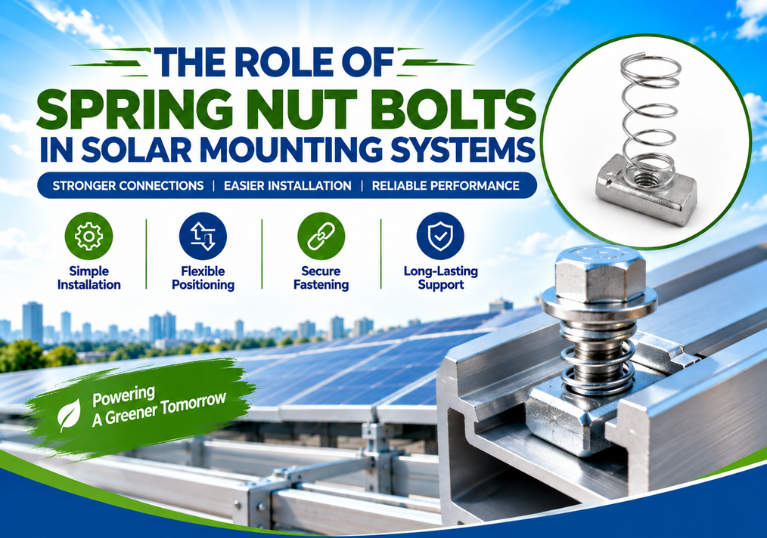
Solar mounting systems consist of several components that work together to securely support solar panels. While mounting rails, clamps, brackets and frames are visible parts of the structure, fasteners also play an important role in maintaining strong and reliable connections. One such component is the Spring Nut Bolt.
Spring nut bolts are designed to simplify fastening in compatible mounting channels and profiles. Their practical design allows installers to position the nut within a channel and secure components at the required location. This makes them useful for various solar mounting applications where easy installation and adjustable positioning are important.
What Is a Spring Nut Bolt?
A Spring Nut Bolt is a fastening component that combines a spring nut with a bolt to create a secure connection between compatible structural components.
The spring mechanism helps hold the nut inside a mounting channel or profile. Once positioned correctly, the bolt can be tightened to secure the required component. This design can make installation more convenient, especially where accessing the rear side of a mounting profile is difficult.
In solar mounting systems, spring nut bolts can be used to connect compatible rails, brackets, profiles and other structural components.
How Does a Spring Nut Bolt Work?
A spring nut bolt works by allowing the nut to sit inside a compatible mounting channel. The spring helps keep the nut in position while the installer aligns the component that needs to be fastened.
The general installation process includes:
- Insert the spring nut into the compatible mounting channel.
- Position the nut at the required point.
- Align the mounting component with the nut.
- Insert the bolt through the component.
- Tighten the bolt to create the required fastening connection.
Why Are Spring Nut Bolts Important in Solar Mounting Systems?
1. Convenient Installation
The spring mechanism helps keep the nut positioned within the mounting channel, making the fastening process more convenient for installers.
2. Adjustable Positioning
3. Secure Component Connections
When the correct size and specification are selected and the fastener is properly installed, spring nut bolts can provide firm connections between compatible mounting components.
4. Efficient Assembly
5. Suitable for Various Solar Applications
Depending on their design and specifications, spring nut bolts can be used in rooftop, ground-mounted and other solar mounting applications.
Applications of Spring Nut Bolts in Solar Projects
Spring nut bolts can be used in different areas of a solar mounting system where compatible profiles and fastening arrangements are available.
Common applications include:
- Solar panel mounting structures
- Rooftop solar mounting systems
- Ground-mounted solar structures
- Aluminium mounting rails
- Solar mounting channels
- Mounting brackets and profiles
- Solar structure accessories
- Industrial structural assemblies
Factors to Consider When Choosing Spring Nut Bolts
Material
Solar mounting structures are generally installed outdoors and exposed to weather conditions. Selecting a suitable material and corrosion-resistant finish is important for outdoor applications.
Size and Compatibility
The spring nut and bolt should match the dimensions and design of the mounting channel or profile. Compatibility is essential for proper installation.
Structural Requirements
Consider the expected loads and fastening requirements of the solar mounting structure when selecting fasteners.
Installation Method
Choose a fastening solution that allows installers to position, align and tighten the components efficiently.
Quality
Spring Nut Bolt vs. Conventional Fasteners
Traditional nuts and bolts may require access to both sides of a component during installation. This can sometimes make fastening more difficult when the rear side of the mounting profile is inaccessible.
A spring nut bolt, when used with a compatible channel, allows the nut to remain within the profile during installation. The nut can be positioned before the bolt is tightened, making it a practical option for certain solar mounting applications.
However, the choice between different fasteners should always depend on the design and specifications of the mounting system.
Importance of Quality Solar Mounting Accessories
A solar mounting structure is made up of more than just rails and frames. Small components such as bolts, nuts, clamps, connectors, brackets and other accessories contribute to the complete assembly.
Using compatible and quality Solar mounting accessories can help installers achieve accurate assembly and reliable connections.
For this reason, solar EPC companies, installers and project developers should consider the quality, compatibility and specifications of every component used in their mounting systems.
Choosing the Right Spring Nut Bolt for Your Solar Project
The right Spring Nut Bolt can make fastening and assembly more convenient in compatible solar mounting systems. Its spring-based design allows the nut to be positioned inside a mounting channel, providing flexibility during installation.
However, the fastener should be selected according to the mounting profile, dimensions, material, environmental conditions and structural requirements of the project.
SOLNXT Energy offers a range of solar mounting accessories designed for solar mounting applications, including Spring Nut Bolts and other fastening components.
For reliable solar mounting structures and accessories, selecting components from an experienced manufacturer can help support efficient installation and long-term system performance.
Frequently Asked Questions (FAQs)
1. What is a Spring Nut Bolt used for?
A Spring Nut Bolt is used to fasten compatible components within mounting channels and profiles. It is commonly used in applications where adjustable positioning and convenient installation are required.
2. Are Spring Nut Bolts suitable for solar mounting structures?
Yes, compatible Spring Nut Bolts can be used in solar mounting structures for securing rails, profiles, brackets, and other components.
3. How does a spring nut stay in the mounting channel?
The spring mechanism helps hold the nut inside the compatible channel, allowing it to be positioned before the bolt is tightened.
4. What should I consider when selecting a Spring Nut Bolt?
Consider the bolt size, nut dimensions, material, corrosion resistance, channel compatibility, and structural requirements of the solar mounting system.
5. Why are quality fasteners important for solar structures?
Fasteners connect different structural components. Using suitable and quality fasteners helps achieve reliable assembly and proper structural connections.