
Cable Tray Installation Guide: Steps & Best Practices
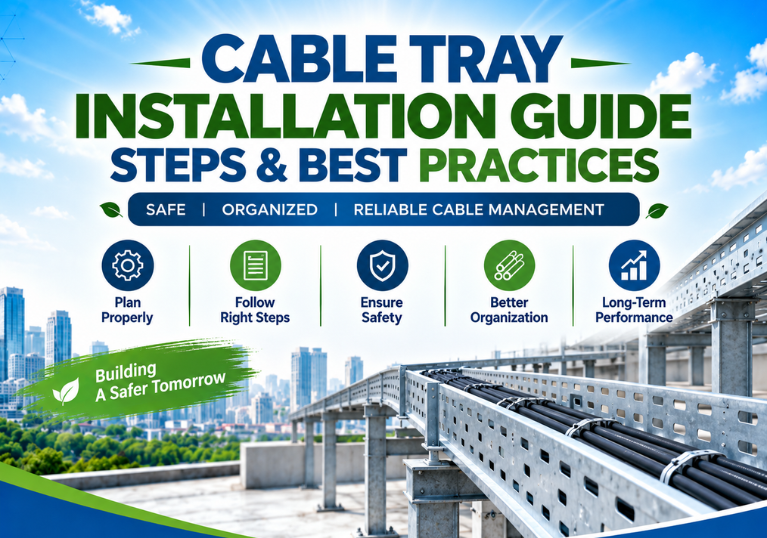
A properly installed cable tray system plays an important role in safe, organized and efficient cable management. Cable Trays provide a structured pathway for electrical and communication cables while making installation, inspection, maintenance and future cable expansion easier.
Whether used in industrial facilities, commercial buildings, power plants, solar projects, or infrastructure applications, selecting the right cable tray and following proper installation practices can improve the overall reliability of the electrical system.
In this cable tray installation guide, we cover the important steps, support requirements, cable placement practices and safety considerations for a professional installation.
What Is a Cable Tray?
A cable tray is a support system designed to route and organize electrical cables and wires. It provides a dedicated pathway for cables and helps prevent unnecessary cable congestion.
Cable trays are available in different designs and materials to suit various applications. Common types include:
- Ladder Cable Trays
- Perforated Cable Trays
- Solid-bottom Cable Trays
- GI cable trays
- Stainless steel cable trays
- Aluminium cable trays
- FRP cable trays
Why Proper Cable Tray Installation Is Important
Correct installation helps ensure that cables remain properly supported and protected throughout their service life.
Some key benefits include:
- Better cable organization
- Improved accessibility for maintenance
- Reduced cable damage
- Efficient use of installation space
- Better airflow around cables
- Easier future cable expansion
- Improved overall electrical system management
Cable Tray Installation: Step-by-Step Guide
1. Plan the Cable Tray Route
Before starting installation, prepare the cable tray layout and determine the complete routing path.
Consider:
- Cable quantity and type
- Cable weight
- Available installation space
- Equipment locations
- Bends and direction changes
- Vertical and horizontal routes
- Access for maintenance
- Future cable requirements
2. Select the Appropriate Cable Tray
Choose the cable tray based on the application and expected cable load.
Important factors include:
- Tray width and depth
- Material
- Cable load capacity
- Environmental conditions
- Corrosion resistance
- Installation location
- Cable type
- Required support arrangement
3. Install Cable Tray Supports
Depending on the installation, supports may include:
- Wall brackets
- Cantilever brackets
- Trapeze supports
- Threaded rod supports
- Floor supports
- Ceiling-mounted supports
4. Check Alignment and Level
After installing the supports, position the cable tray sections and check their alignment.
Make sure:
- Tray sections are properly aligned
- Horizontal sections are level
- Vertical sections are securely supported
- Joints are properly connected
- There are no sharp edges that could damage cables
5. Connect Cable Tray Sections
Connect individual tray sections using suitable couplers, bolts, nuts and other approved accessories.
Ensure that all connections are properly tightened. Avoid loose joints because they can affect the mechanical integrity of the installation.
Where electrical bonding or earthing is required, use the appropriate bonding method according to the project specifications and applicable electrical standards.
Cable Tray Installation Best Practices
Use the Correct Tray Size
Select a tray that can accommodate the current cable load while allowing reasonable provision for future expansion.
Avoid both excessive overcrowding and unnecessarily oversized systems.
Maintain Proper Support
Cable trays should be adequately supported according to the manufacturer’s recommendations and project requirements.
The support arrangement should account for the total cable load as well as the weight of the tray and accessories.
Avoid Overloading
Do not exceed the manufacturer’s recommended load capacity.
Overloading can increase mechanical stress and may cause deformation or sagging.
Protect Cables From Sharp Edges
Cable tray edges and joints should not create conditions that could damage cable insulation.
Use suitable accessories and edge protection where necessary.
Common Cable Tray Installation Mistakes to Avoid
Incorrect support spacing
Insufficient support can lead to tray deflection or instability.
Overloading the tray
Too many cables can exceed the recommended load capacity.
Poor cable organization
Ignoring environmental conditions
Material selection should consider moisture, chemicals, outdoor exposure, temperature and corrosion risks.
Poor earthing or bonding
Where required, metallic tray systems should have appropriate electrical continuity and bonding arrangements.
Choosing the Right Cable Tray Manufacturer
The quality of the cable tray can have a direct impact on installation performance and long-term durability. When selecting a supplier, consider factors such as product quality, material, manufacturing standards, load capacity, customization options and technical support.
SOLNXT Energy provides cable tray solutions for industrial and infrastructure applications. As a Cable Tray Manufacturer In Ahmedabad, SOLNXT Energy can support projects requiring reliable cable management and routing solutions.
You can also explore SOLNXT Energy’s other Solar Mounting Structure Solutions for solar power projects.
Frequently Asked Questions (FAQs)
1. What is cable tray installation?
Cable tray installation is the process of installing a structured support system for routing, organizing and protecting electrical and communication cables in industrial, commercial and infrastructure projects.
2. What are the main steps in cable tray installation?
The main steps include route planning, selecting the appropriate cable tray, installing supports, aligning tray sections, connecting joints, installing bends and accessories, placing cables, securing cables, checking earthing and conducting a final inspection.
3. How do I choose the right cable tray?
The right cable tray depends on cable quantity, cable weight, tray dimensions, installation environment, corrosion exposure, load capacity and project requirements. A professional cable tray manufacturer in India can help select a suitable tray system.
4. What are common types of cable trays?
Common cable tray types include ladder cable trays, perforated cable trays, solid-bottom cable trays, GI cable trays, aluminium cable trays, stainless steel cable trays and FRP cable trays.
5. Why is cable tray alignment important?
Proper alignment helps maintain the mechanical stability and appearance of the cable tray system. It also makes cable installation, inspection and maintenance easier.
Conclusion
Proper cable tray installation is essential for creating a safe, organized and maintainable cable management system. From route planning and tray selection to support installation, cable placement, earthing and final inspection, every stage should be completed carefully.
Selecting the right tray, maintaining suitable support spacing, avoiding overloading and following project-specific electrical and safety requirements can help improve the reliability and serviceability of the overall installation.
If you are planning an industrial, commercial, or solar project, working with an experienced Cable Tray Manufacturer In India can help you select the right cable management solution for your application.